
Dry skin in school kids usually comes from cold, dry air, hot baths, and bare legs in uniform shorts or skirts on chilly mornings. The fix is simple: a lukewarm bath, a body lotion rubbed in straight after, and a richer cream on knees, elbows and hands. If a rash is red, itchy, weeping or not getting better, take your child to the clinic or a doctor rather than trying more creams at home.
Why do kids get dry skin and ashy legs in winter?
In South Africa the colder school terms run roughly from April to September, and for much of the country that means months of dry air. On the Highveld, a July morning can start near freezing, and the air holds very little moisture. Skin loses water to the air faster, and children’s skin feels it quickly.
Then there is the school uniform. Grey shorts, knee-high socks and skirts leave a stretch of leg open to the wind at the bus stop or in the taxi queue. By break time, those shins can look grey, flaky and ashy. That ashy look is simply dry skin. The top layer is rough and lifted, so it catches the light and looks pale, and it shows clearly on darker skin.
Home habits play a part too. A hot bath feels wonderful on a cold night, but very hot water strips the natural oils from the skin, and heaters dry out the air indoors.
How can I stop my child’s skin from drying out?
Start with bath time. Keep the water warm, not hot, and keep baths short, around ten minutes. Use a mild soap only where it is needed, and rinse well. Then pat your child dry with a towel instead of rubbing hard.
The most useful habit is moisturising straight after the bath, while the skin is still slightly damp. That is when a lotion does the most good, because it helps hold on to the water that is already in the skin. A minute or two is all it takes, and many kids enjoy it once it becomes part of the routine.
For everyday all-over use, GLYSOLID Body Lotion Classic is a good family lotion. It is made with vegetable glycerin, chamomile extract, vitamin E and bisabolol, it is suitable for all skin types, and it absorbs quickly without feeling greasy. That matters to kids who want to pull on their school socks and go. The 250ml bottle is R115, and the 500ml bottle is R210 if you are doing the whole family.

Featured product
GLYSOLID Body Lotion ClassicIntensive everyday care for soft, comfortable skin.
From R115
Glycerin is a humectant, which means it draws water towards the skin and helps keep it there. That is why it shows up in so many moisturisers, and why you will find it in every GLYSOLID product. If you are curious, our post on what glycerin does for your skin explains it in plain words.
What about knees, elbows and rough hands?
Some spots need more than a lotion. Knees that kneel on the playground, elbows that lean on desks, and hands that are washed often all get rougher than the rest of the body.
For those areas, GLYSOLID Glycerin Cream is richer. It combines a high glycerin content with allantoin, which is used in skin care to soothe and smooth rough skin. Use a small amount and rub it in well, since a little goes a long way. Its product information says it is suitable for people with a tendency to skin irritations and allergies, but every child is different, so a patch test first is a sensible step.
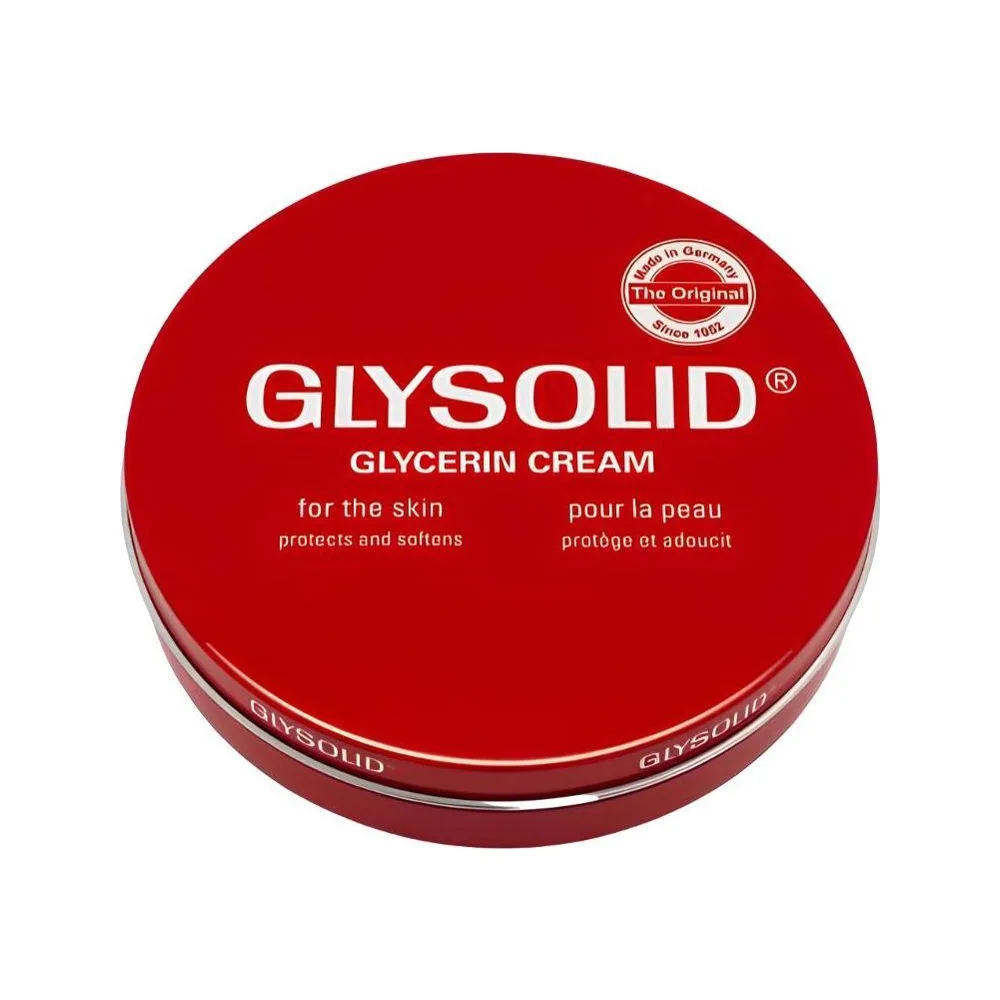
The 60ml tub costs R75 and is a flat, round shape about 78mm across, small enough for a school bag or a pencil case pocket. Older kids can rub a bit into their hands after washing them at school. Bigger tubs, such as the 175ml for R115 or the 400ml for R295, make sense if the whole household uses it.
How do I patch test a new cream on my child?
It is simple. Put a small amount of the cream on the inside of your child’s forearm, about the size of a R5 coin. Leave it for a day and check the spot the next morning and evening.
If the skin looks normal, you can use the cream more widely. If you see redness, swelling, bumps or your child says it itches or burns, wash it off with plain water and stop using it. Patch testing is especially wise if your child has sensitive skin, eczema or allergies, or if you are trying something new for the first time.
A school morning and bedtime routine that works
Mornings are busy, so keep it short. After washing, rub Body Lotion Classic over legs and arms while your child is still in the bathroom. Add a dab of Glycerin Cream to knees and the backs of hands. Then socks, uniform and out the door. If the morning is very cold, long socks or tights help protect the skin from wind.
In the evening, a short lukewarm bath followed by lotion all over is the main step. Then give elbows, knees and heels a little Glycerin Cream. Children who play barefoot in summer often have dry heels in winter, and a layer of cream with cotton socks overnight helps them feel softer.
Remind kids to drink water during the day as well, since many barely touch their bottles in winter.
For more ideas for the whole house, from toddlers to gogo, see our winter skin care guide for the family.
When should I take my child to the clinic?
Ordinary dry skin feels rough and looks ashy or flaky, and it improves within days of regular moisturising. Some things are different and need a nurse or doctor to look at them.
Take your child to the clinic, a pharmacist or a doctor if the skin is very red, cracked and bleeding, weeping or crusty, or so itchy it keeps your child up at night. The same goes for a rash that spreads, comes with fever, or does not get better after a week or two of gentle care. These can be signs of eczema, an infection or an allergy, and they need proper advice. For babies and very young children, always check with your clinic sister before choosing a cream.
Common questions
Why are my child’s legs ashy in winter?
Ashy legs are a sign of dry skin. Cold, dry air, hot baths and bare legs in uniform shorts or skirts make the top layer of skin rough and pale. Moisturising straight after the bath usually brings back a smooth, even look.
How often should my child use body lotion?
Once a day after the bath or shower is a good start, and a second time in the morning on very cold days. Add a richer cream to knees, elbows and hands if they stay rough.
Can kids use GLYSOLID Glycerin Cream?
GLYSOLID Glycerin Cream is suitable for all skin types, and its product information says it suits people prone to skin irritation and allergies. For school-age children, do a patch test first, and ask your clinic sister for advice for babies or toddlers.
Is a hot bath bad for dry skin?
Very hot water strips the natural oils from the skin and can leave it drier. Lukewarm water and a short bath of about ten minutes are kinder to the skin, especially in winter.
When is dry skin a reason to see the clinic?
If the skin is bleeding, weeping, crusty, spreading or very itchy, or if it has not improved after a week or two of moisturising, see a clinic, pharmacist or doctor.

Written by the GLYSOLID South Africa team
We bring GLYSOLID's German glycerin skin care to South Africa. This article is general skin care advice, not medical advice. If your skin is bleeding, infected or not getting better, please see a pharmacist, clinic or doctor. Questions? Get in touch or WhatsApp us on 065 580 6560.


